
Virtual Staging vs Real Staging: Is It Worth It?
Cost, time and what buyers see online and in person, compared side by side, with plain answers on vacant listings and when real staging is the better buy.
Virtual staging AIUpload a room photo, pick a room type and a style, and press Generate.
Virtual staging is worth it when a home is vacant and most buyers will see it online first: it puts furniture in the photos for a small fraction of what renting real furniture costs. Real staging is the better choice when the visit in person decides the sale, because virtual furniture exists only in the photo.
This guide compares the two on cost, time and what buyers actually see, then answers the worries that come up most often on agent and investor forums.
Is virtual staging better than real staging?
Neither is better in general. They solve different parts of the same problem, and the table shows where each one is stronger.
| Question | Virtual staging | Real (physical) staging |
|---|---|---|
| What it is | Furniture added to the listing photos | Real furniture rented and set up in the home |
| How it is priced | Per photo, paid once | Per home, per month |
| What you need | One good photo of each room | Access to the home for delivery, set-up and removal |
| What buyers see online | Furnished rooms, with a disclosure label | Furnished rooms |
| What buyers see in person | Empty rooms | The same furnished rooms as in the photos |
| Changing the style | A new render | A new delivery |
| Disclosure | Expected by many MLSs and portals | Not needed: the furniture is real |
| Fits best | Vacant homes that are found online first, rentals, new construction | Homes where showings and open houses carry the sale |
Rentals and new builds are the clearest cases for the left-hand column. See virtual staging for rental properties and virtual staging for new construction homes.
Cost
The two are priced in different units, which is most of the story.
Physical staging costs about $2,000 to $5,000 per home per month, according to Bella Virtual's comparison of virtual staging software and Pixel Shouters' review of BoxBrownie pricing (both checked 2026-11-19). It is a monthly bill, so it grows for as long as the home stays on the market.
Virtual staging is paid per photo, once. The same two sources put a human designer at about $24 to $69 per photo (checked 2026-11-19). AI tools cost less: on the day we checked their pricing pages, plans and credit packs worked out at about $0.13 per photo at the low end (REimagineHome, largest plan) and $2.67 at the high end (Virtual Staging AI, smallest plan billed yearly), while Apply Design sells single one-click staged photos at $10.50 to $15 (all checked 2026-11-19).
How much does virtual staging cost per photo? has the full table. Virtual Staging Maker's own prices are on the pricing page: there is no free trial, and the trial pack is the cheapest way to start.
Time and effort
Physical staging is a project. You choose a stager, agree on what goes in which room, wait for a delivery date, give access for the set-up and arrange removal after the sale. Someone has to be at the home for each of those visits.
Virtual staging needs a photo. With an AI tool you do it yourself from your desk: in Virtual Staging Maker you upload one photo, pick the room and the style, and press Generate. Most photos are ready while you wait. With a human designer you send the photos and wait for the files to come back.
The effort that virtual staging does ask for is checking. An AI model can move a window or misjudge the size of a sofa, so every result has to be compared with the original before it goes on a listing. How to virtually stage an empty room with AI lists what to look for.
What buyers see online, and what they see in person
Online, both give you furnished photos. A staged photo answers what an empty one cannot: which room this is, where a bed or a table might go, and roughly how the space is used.
In person the two part ways. A physically staged home looks like its photos. A virtually staged home is empty, and the buyer has to carry the staged version in their head from the listing to the room.
That gap is the main risk of virtual staging, and it is manageable:
- Label every staged photo. The virtual staging disclosure label tool adds “Virtually staged” to a photo for free.
- Show the empty photo right after the staged one, so that buyers have seen both before they visit.
- Say “virtually staged” in the listing remarks. Is virtual staging allowed on MLS listings? explains the usual rules.
- Print the staged photos and leave them in the rooms for showings.
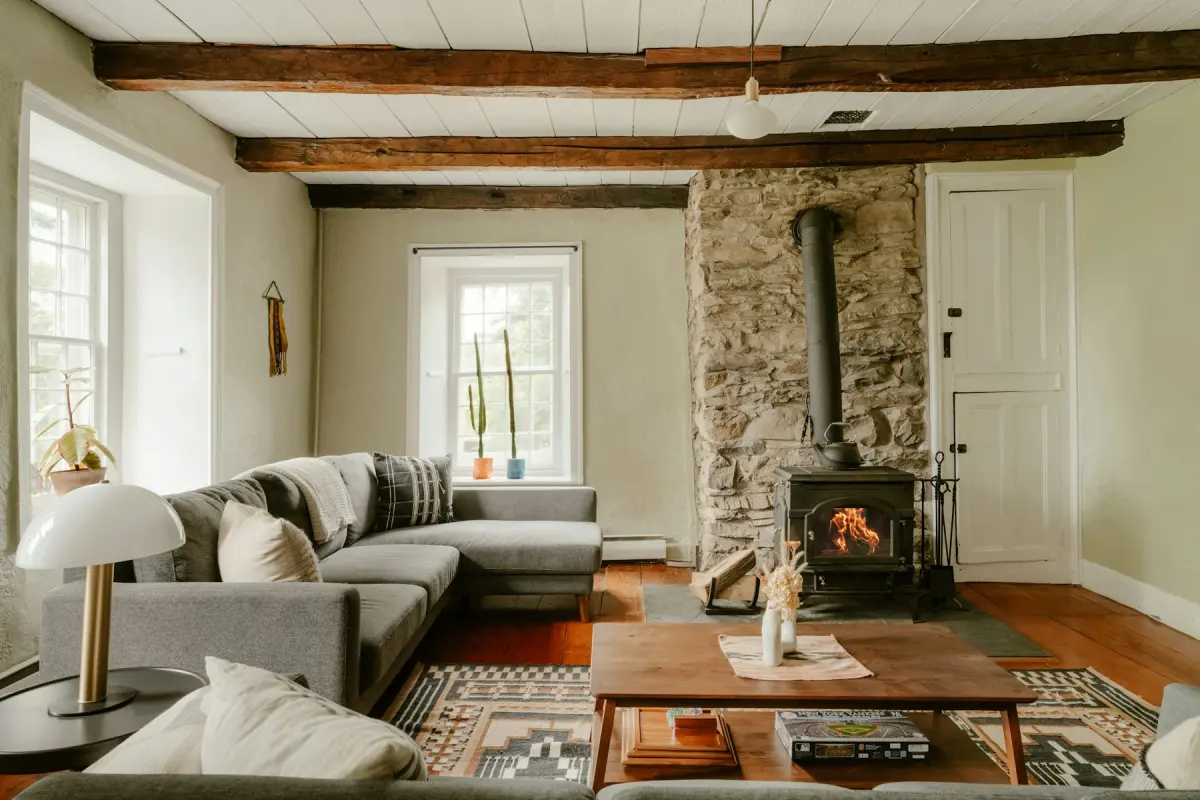
Stock photo used as an illustration of a furnished living room. With real staging, buyers find the furniture in the room when they visit. With virtual staging they find it only in the photo.
When real staging is the better choice
- The visit decides. If buyers in your market expect open houses and make up their minds on the spot, furniture they can walk around does work that a photo cannot.
- The room is hard to read even when you stand in it. An odd corner, a long narrow living room or a very small bedroom may need a real bed to prove that a bed fits. An AI model cannot measure a room, so a staged photo is not that proof.
- You need video, a 3D tour or many matching angles. Real furniture looks the same from every angle and in every medium. Virtual Staging Maker makes no video tours, 3D tours or 360° panoramas, and it does not keep furniture identical across different photos of the same room.
- Your MLS or the seller does not want edited photos. Then the question is settled.
And when the home is occupied and furnished, you may need neither. Tidy the rooms, photograph them as they are, and use AI room declutter if a few personal items are still in the frame.
Is virtual staging worth it for a vacant house?
The cost side is small and known: a handful of photos, paid once. The benefit side cannot be promised. You will find claims that staged homes sell faster or for more. We do not repeat them here, because we have no source for them that we can verify.
What can be said without numbers is this. A photo of an empty room gives little sense of scale and no hint of use, and a buyer who browses online has only the photos to go on when choosing which homes to visit. If the alternative to virtual staging is a set of bare rooms, the staged photos give those buyers more to go on. If the alternative is physical staging that you would have paid for anyway, virtual staging adds little.
A sensible test is to stage the two or three rooms that matter most, usually the living room and the main bedroom, and to leave the rest as they are.
Should I virtually stage a vacant listing or leave it empty?
For most vacant listings the practical answer is both, in the same listing: the staged photo with its label, and the empty original straight after it. Buyers get the idea of the room from the first photo and the plain truth from the second.
Leave a room empty when its best feature is the room itself, such as a wall of windows or original woodwork that furniture would cover. Leave it empty when your photo is poor, too: staging does not rescue a dark or tilted photo. How to photograph empty rooms for virtual staging covers how to take a better one.
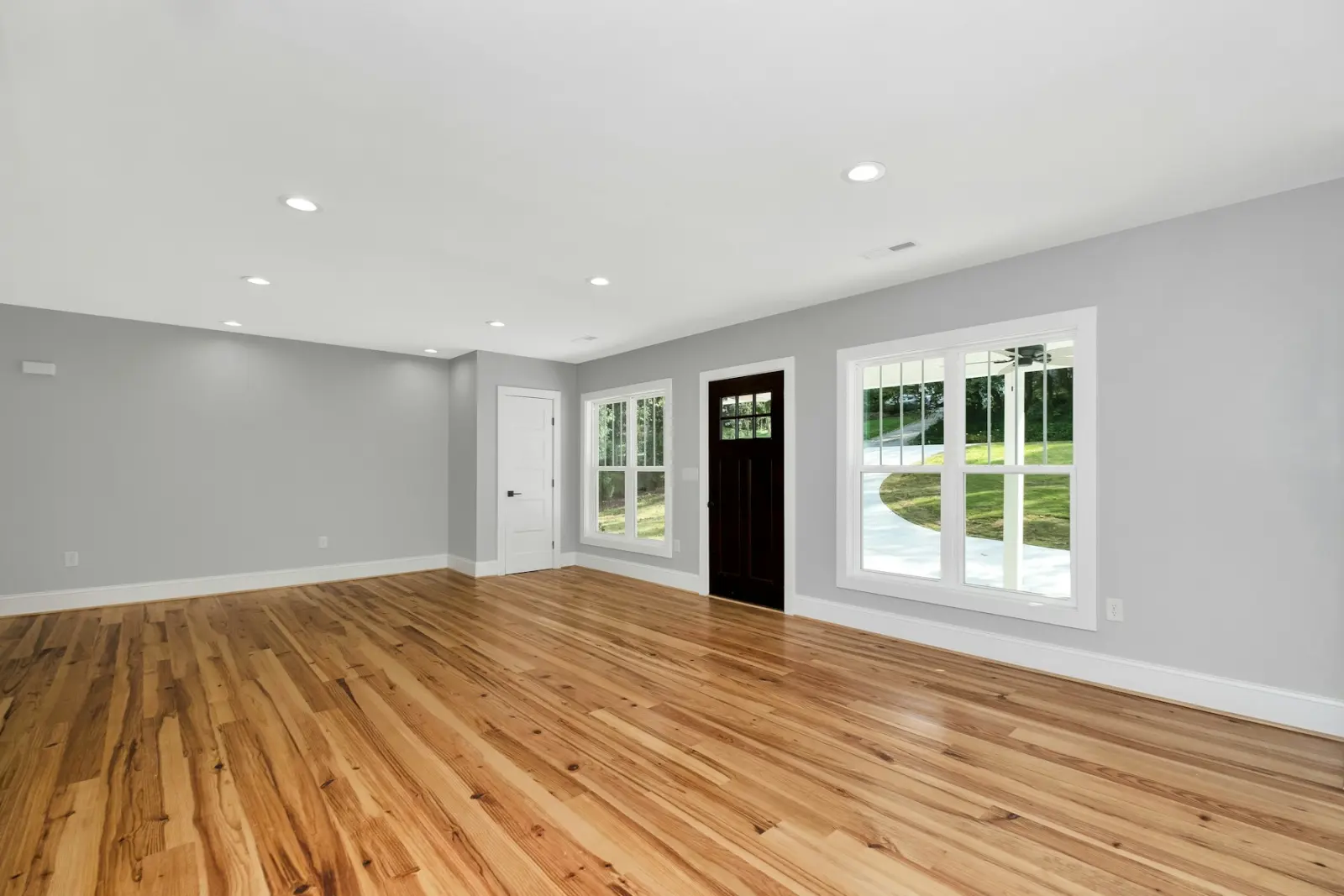
Stock photo used as an illustration: an empty room like this is what visitors to a virtually staged home see in person.
What forum users worry about
On BiggerPockets and ActiveRain, people tend not to ask how virtual staging is done. They ask each other whether it works and whether it is honest. Titles there include “Is virtual staging effective vs actual staging?” and “Virtual Staging A Waste of Money?”. These are the worries behind them.
Is virtual staging deceptive?
It is when it changes the property or hides that the photo was edited. It is not when the furniture is labelled as digital and the room is shown as it is. The line is easy to hold: change nothing but furniture and decor, label the photo, and show the original.
Is virtual staging a waste of money?
It can be. Staging a poor photo, staging a room in a style that does not fit the building, or re-rendering the same photo many times for small differences all waste money. In Virtual Staging Maker each press of Generate uses credits, so decide what you want before you press.
Will buyers be disappointed by an empty home?
Some will be if the listing let them expect furniture. Disclosure in the photo and in the remarks, plus the empty photo in the listing, removes most of the surprise.
Can AI virtual staging make empty rooms look realistic?
It depends on the photo and on the room. Level, well-lit photos with open floor give the model the most to work with. Rooms with unusual layouts deserve a closer look at the result. An AI model can get a photo wrong, which is why the check against the original is part of the job.
A middle path
The choice does not have to be all or nothing. You can stage the main living area with real furniture and use virtual staging for the secondary bedrooms, the home office or the basement. Or you can stage virtually for the launch and bring in real furniture later if showings stall.
Try it on one room
To see what virtual staging does with your own photos, start with one room in the generator. The virtual staging for real estate agents page describes a full vacant-listing workflow.