
Mid-Century Modern Virtual Staging: Walnut Tones and Tapered Legs
Mid-century modern virtual staging fills a photo of an empty room with walnut-toned furniture on tapered legs, curved shapes and a mustard, teal or burnt-orange accent.
Upload the photo, keep Virtual staging selected with the Mid-century style, set the room type and press Generate.
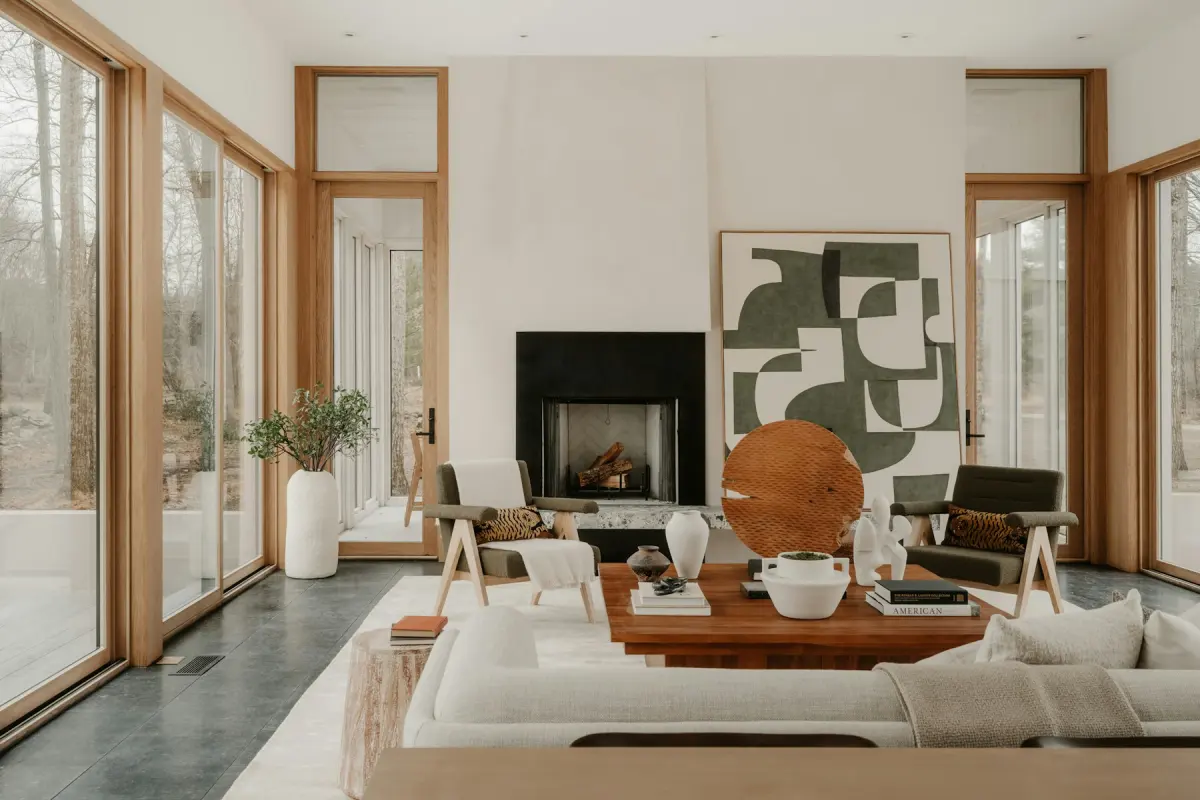
Style inspiration
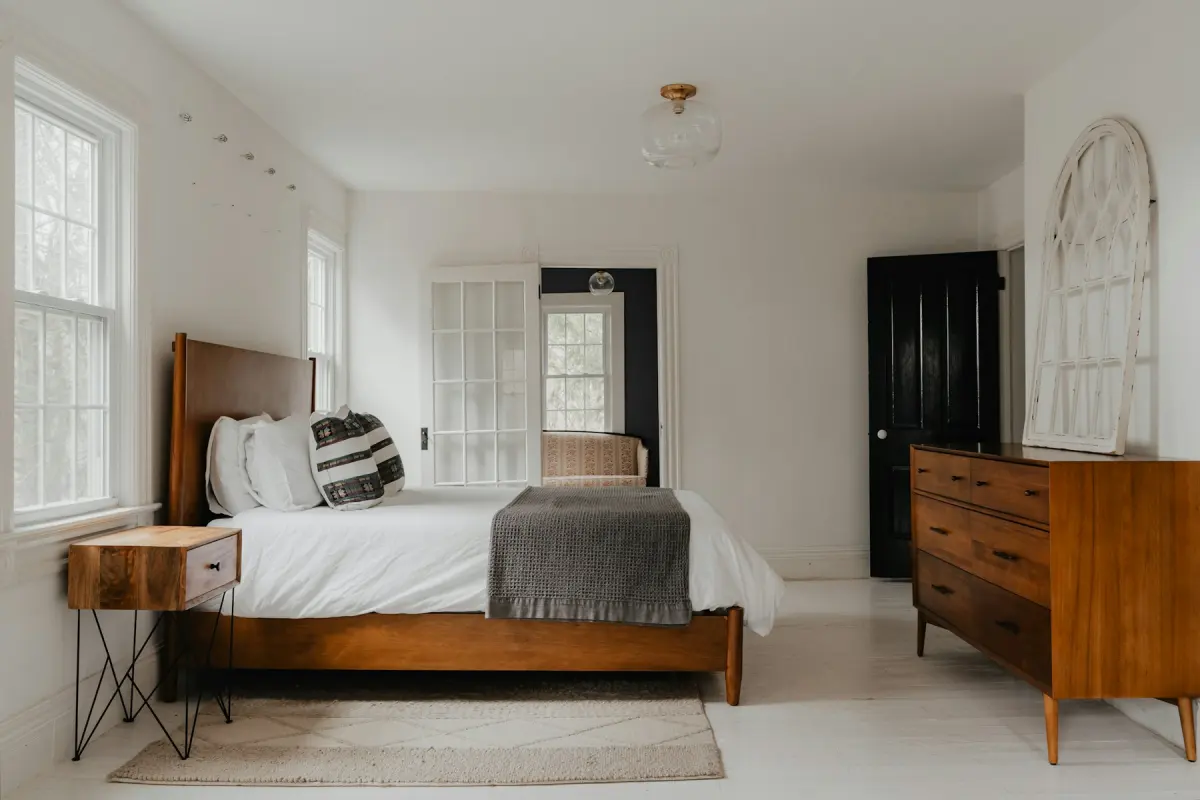 Mid-century
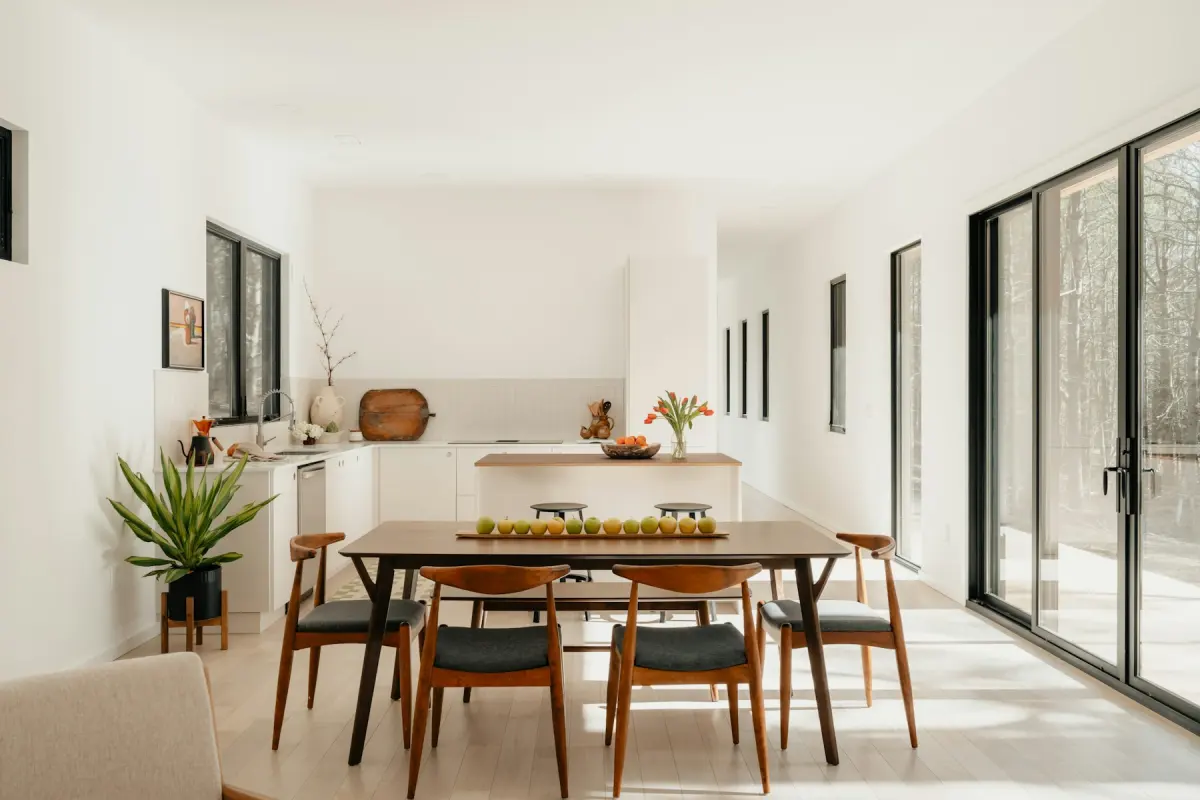 Mid-century
Example note
Sofa with a walnut frame, tapered legs and oatmeal upholstery on the longest wall, two curved armchairs across from it, an oval wooden coffee table, a low walnut sideboard. One arc floor lamp beside the sofa. Mustard accents in the cushions and wall art only.
Mid-century modern staging uses furniture shapes from the middle of the last century. Sofas and chairs stand on tapered wooden legs. Wood is walnut-toned and left visible on frames, sideboards and table edges. Shapes curve: a rounded armchair, an oval coffee table, a side table with soft corners. Color arrives in small amounts of mustard, teal or burnt orange, and each room gets one statement lamp, such as an arc or tripod floor lamp. The result is warm and a little playful, with more character than plain Modern.
It fits homes that already share its era or its lines: ranch houses, split-levels, post-war bungalows, and any home with large panes of glass, a low roofline, wood paneling or a brick fireplace. It also suits city condos and lofts aimed at design-minded buyers, because the furniture is low and leggy and leaves the floor visible. It is a poor match for ornate period houses and for rustic properties, where walnut pieces with thin legs look like they came from a different building. Traditional or Farmhouse serve those better.
The best rooms for it are the living room, the dining room and the home office. A walnut desk with a statement lamp is one of the clearest ways to make a spare room read as a workspace. Bedrooms work when the accent color is kept quiet. Think about the existing floor: Virtual staging keeps it, and walnut furniture on a dark brown floor can merge into one mass. Ask for a pale rug under the seating group to separate them. On light floors and white walls the wood stands out on its own.
Mid-century is not the same as Modern, despite the shared word. Modern here is white, gray and black with metal and glass; Mid-century is wood and warm color. It also differs from Scandinavian, which uses light wood and almost no color, and from Bohemian, which shares the earthy tones but layers patterns, rattan and plants. Choose Mid-century when you want warmth and a recognizable design period without filling the room.
Best for
- Ranch houses, split-levels and post-war bungalows
- Homes with a brick fireplace, wood paneling or large panes of glass
- City condos and lofts marketed to design-minded buyers
- Home offices and dining rooms
Settings and tips
- Pick one accent in the note: mustard, teal or burnt orange. All three in one room make it look themed.
- On a dark floor, ask for a pale rug under the seating so the walnut pieces do not merge with it.
- Name the statement lamp, such as “an arc floor lamp beside the sofa”. Existing ceiling lights are kept as they are.
- The note on this page is written for a living room. With Room set to Home office, try “walnut desk on tapered legs facing the window, a low bookshelf, one mustard armchair in the corner”.
- If the room has a fireplace, ask for the seating to face it and for the hearth to stay clear.
Frequently asked questions
More rooms and styles
- Room redesignRestyle a furnished room in one of 12 styles
- Living roomA sofa, chairs, rug and art for an empty living room
- BedroomA made bed, nightstands and a rug for an empty bedroom
- KitchenStools, a small table and light counter styling
- Dining roomA table, chairs and a sideboard sized to the room
- BathroomTowels, a bath mat and a plant; the fixtures stay
- Home officeA desk, an office chair and a bookshelf for a spare room