
Transitional Virtual Staging: Classic Shapes in Neutral Tones
Transitional virtual staging furnishes a photo of an empty room with a balance of classic and contemporary pieces in neutral beige and greige tones.
Upload the photo, keep Virtual staging and the Transitional style selected, set the room type and press Generate.
Style inspiration
 Transitional
 Transitional
Example note
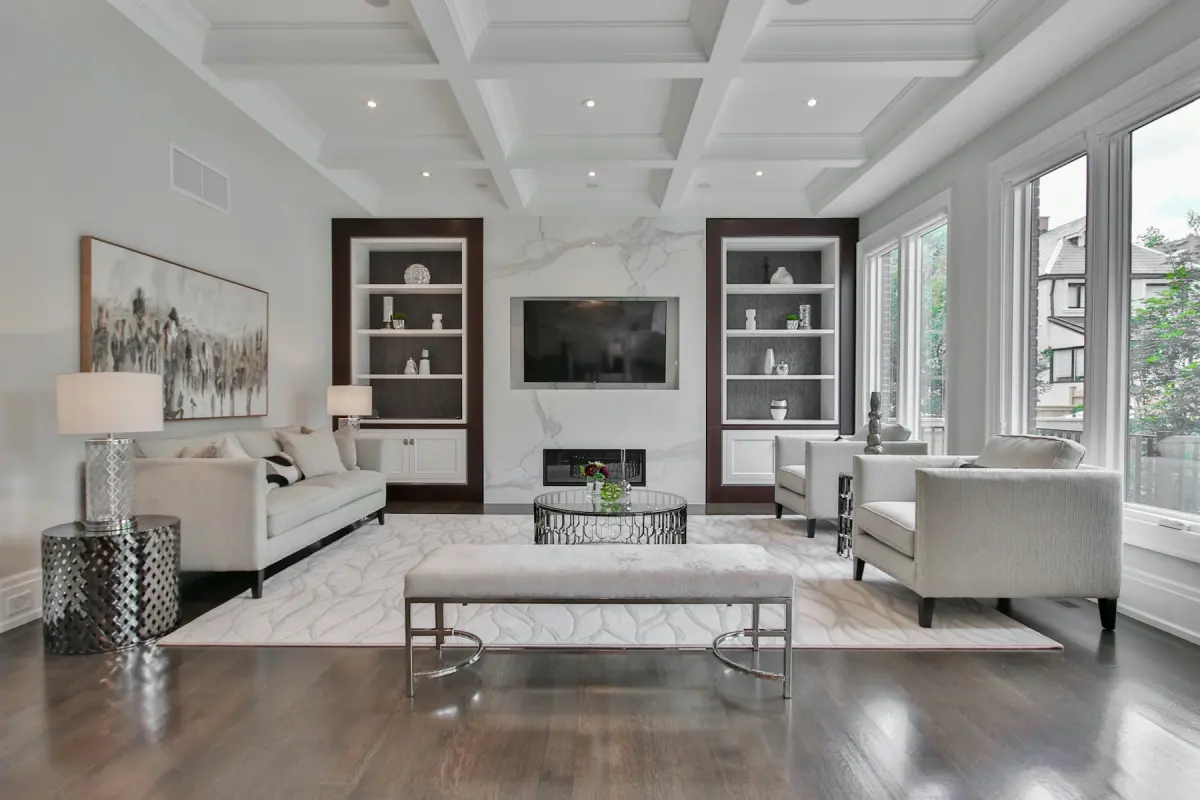
Greige tailored sofa centered on the longest wall, two cream armchairs angled toward it, a wood coffee table with a thin metal base, a beige textured rug. A sideboard with one table lamp, abstract art in muted tones, two plants. Keep the path from the door clear.
Transitional staging sits halfway between Traditional and Modern. The shapes are classic but simplified: a sofa with tailored upholstery and straight or gently curved arms, armchairs without carving or skirts, a wood coffee table with a metal base or metal hardware. The palette is neutral: beige, greige, cream, taupe. Wood and metal are mixed in small amounts. Nothing in the room belongs strongly to one period, which is why it rarely looks wrong in a sale listing.
Because it does not lean hard in any direction, it fits the widest range of homes: suburban houses of most ages, townhouses, condos, and homes where the kitchen was updated but the trim is original. It is the style to pick when you do not know who the buyer is, or when the people viewing the listing range from first-time buyers to downsizers.
Its weakness is the same as its strength. A transitional room does not stand out, so it adds little to a home whose appeal is character: a loft, a mid-century ranch, a beach cottage or a grand period house. Use the style that matches the building there. It can also look flat in a room with beige walls and beige carpet, since Virtual staging keeps the existing floor and wall color and the furniture is beige as well. In that case ask for a darker sofa, a patterned rug or black metal accents in the note.
Transitional suits every main room: the living room, the main bedroom, the dining room, the home office and the entryway. It is most often confused with Traditional, which is richer in wood, more formal and symmetrical, and with Modern, which is cooler, with a white, gray and black palette and glass. A simple test: if the house has both a classic feature such as crown molding and a recent one such as a new kitchen, Transitional bridges them. Luxury is the step up when the home’s finishes call for richer materials.
Best for
- Listings where the buyer could be almost anyone
- Suburban houses and townhouses with a mix of old and updated features
- Living rooms and main bedrooms
- Agents who want one dependable style across several listings
Settings and tips
- On beige walls and carpet, ask for contrast in the note: a darker sofa, a patterned rug or black metal accents.
- Say which way the balance should lean: “more classic, with rolled arms” or “more contemporary, with metal legs”.
- Greige can come out warm or cool. Name it, such as “warm greige, no blue-gray”, to match your walls.
- When unsure, render Transitional first and try a bolder style only if the room looks too plain, since each render uses credits.
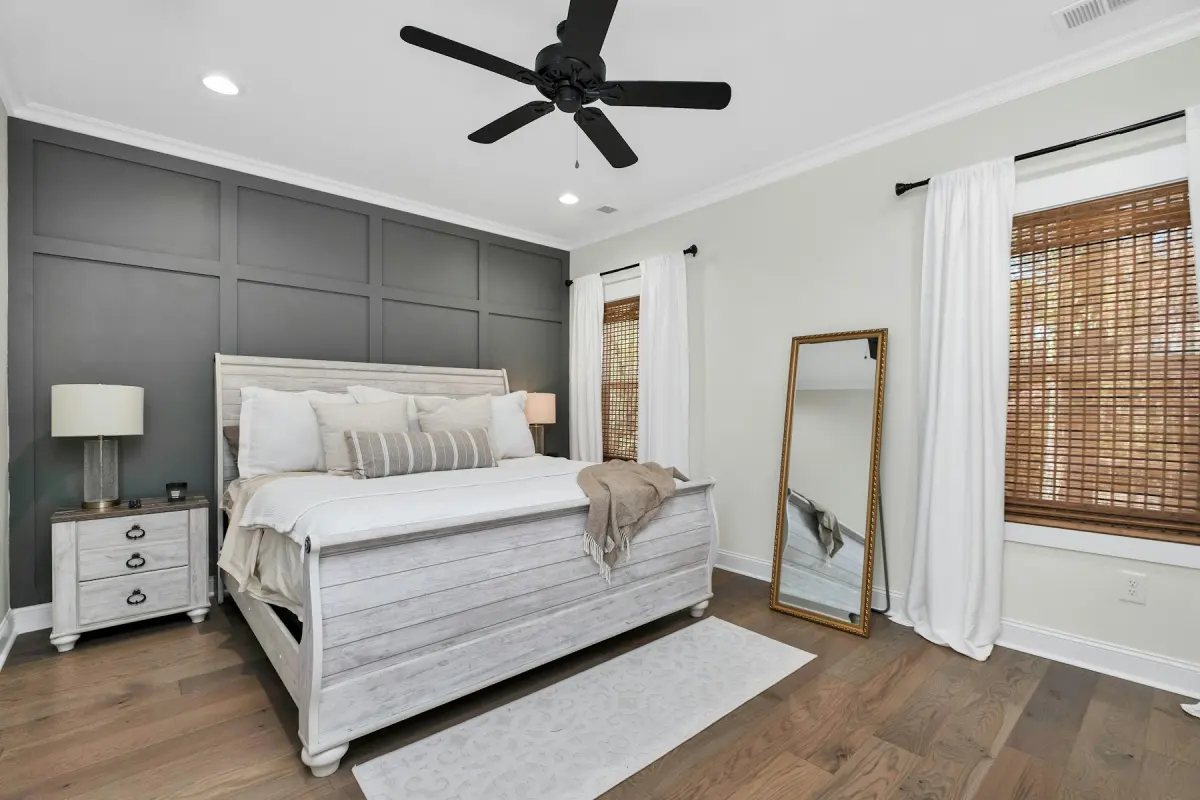
- The note on this page describes a living room. With Room set to Bedroom, try “upholstered headboard in greige, cream bedding, two wood nightstands with matching lamps, a bench at the foot of the bed”.
Frequently asked questions
More rooms and styles
- Room redesignRestyle a furnished room in one of 12 styles
- Living roomA sofa, chairs, rug and art for an empty living room
- BedroomA made bed, nightstands and a rug for an empty bedroom
- KitchenStools, a small table and light counter styling
- Dining roomA table, chairs and a sideboard sized to the room
- BathroomTowels, a bath mat and a plant; the fixtures stay
- Home officeA desk, an office chair and a bookshelf for a spare room